
The Program: Design (as) Research
What constitutes the knowledge cultures of design? How have designers’ concepts of knowledge changed, and what are the consequences? Is designing a research activity, and how do designers “do” research?
The one-year COOP Design Research MSc integrates design and research as transdisciplinary fields at the intersection of design anthropology, material culture studies, architecture and design research, history and theory, as well as social sciences. The program critically engages with current concerns in design studies and architectural research, departing from the multiple modern legacies unfolding around the Bauhaus, as design’s status as a clearly defined discipline has been challenged along with the anthropocentric notion of its power to shape an exclusively man-made environment. In manifold ways, design as a knowledge culture still rests on modernist ideas of “world making”, of the creation of “artificial things”. The COOP Design Research MSc critically interrogates this expansive cultural, political and social practice which manifests itself in objects, systems and structures of everyday life.
The program offers a learning space for reflecting and diffracting design’s theoretical and practical frameworks, the hegemonic ideologies and radical epistemological shifts affecting the practices of designers and architects, as well as the consequences for the environment and the earth. This includes a critical revision of design ideals rooted in euro-centric modernity, perceiving their entanglements with (post)colonial, capitalist patterns of resource exploitation, environmental and social injustice, as well as the urgency of placing them in the context of contemporary ecological and decolonial discourses and practices.
COOP Design Research MSc
| Qualification | Master of Science (HS Anhalt) |
| Language | English (option to write Master thesis in German) |
| Contents | Design studies, Cultural studies |
| Participants | Graduate students with a background in architecture, design or cultural studies, as well as related fields, with at least one year of practical experience in architecture, design and/or cultural production |
| Duration | Two terms (60 ECTS), optional third term (additional ECTS can be obtained) |
| Costs | tuition fees EUR 1,250.00 per term |
| Study period | 1 October to 30 September |
| Study locations | Bauhaus building, Dessau (main workspace), Humboldt University, Berlin |
| Offered by | Bauhaus Dessau Foundation and Anhalt University of Applied Sciences, in collaboration with the Humboldt University, Berlin |
| Admission requirements | Bachelor (240 ECTS) or Master’s degree in architecture or design, cultural studies, or comparable study courses. Applicants must demonstrate at least one year’s work experience in architecture, design, cultural production or related fields. |
| Application period | 15 December 2025 to 15 May 2026 (APPLY NOW) |
Please allow sufficient processing time for filing the application through the Uni-Assist portal if you received your university admission credentials in another country than Germany.
About Us
The COOP Design Research MSc is a collaborative program offered by the departments of Architecture and Design at Anhalt University of Applied Sciences (HSA) and the Bauhaus Dessau Foundation, in cooperation with Humboldt University Berlin (Research Cluster Matters of Activity / Department of Cultural History and Theory). Courses and thesis supervision are jointly provided by professors and lecturers affiliated with the three institutions as well as international guests.
The main workspace of the program is the historical Bauhaus building in Dessau-Roßlau, adjacent to the campus of the Anhalt University’s Architecture and Design Departments. Here, the Bauhaus Dessau Foundation and HSA offer a diverse learning environment with a broad range of cultural and education programs in the fields of Design, Architecture, Museum Practices and Cultural Heritage Studies.
The Bauhaus
legacy…
The Bauhaus building, its archives, museum, artefacts and legacies offer a highly suitable vantage point for a contemporary critical inquiry into concepts and notions of designand its theoretical and historical roots in modernity. The manifold and controversial historiographies written about the Bauhaus share the conviction that the Avant-garde school was the birth place of the idea of modern design, once considered a universal and timeless concept interwoven with industrialization, technological progress and mass consumerism. This paradigm of design as an important building block of industrial modernity would habitually obscure its problematic fundamental reliance on colonialism and capitalist exploitation of human and natural resources.
Situating critical research and learning at the Bauhaus in Dessau today, the program explores how to question hegemonic paradigms of design, and how alternative architectural and design historiographies emerge from diverse trans-cultural resonances and conversations. Instead of linear narratives, we ask how stories of interconnected entanglements and ecologies can be told otherwise. Modes of co-production and co-habitation come into view, that already co-existed within the dominant narratives of design in industrial modernity.
… situated in a “post-industrial”
knowledge landscape
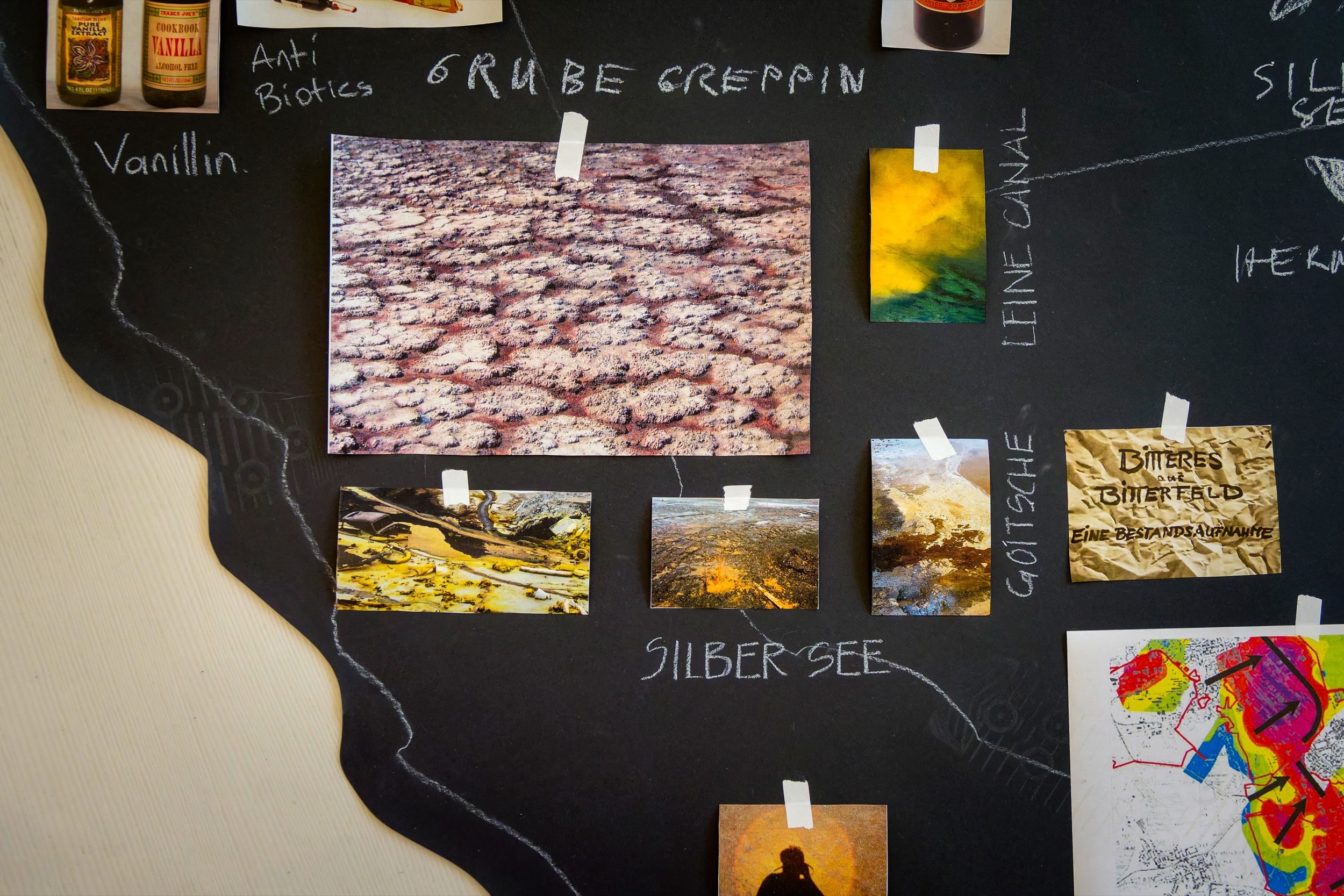
Engaging with these questions, the program not only draws on the knowledge assembled by the sites, collections and scholarship of the Bauhaus and the partner institutions HSA and HU, but also on the city and the region as special reservoirs of knowledge on industrial and “post-industrial” transformation. Different layers of the built environment, museums and landscape tell of the search to design these transformations, manifest in everyday culture, urban space and ecologies – from Enlightenment garden landscapes to abandoned or repurposed 20th century industrial plants and power stations, from open-pit mines decommissioned in a push for renewables to new logistics and technology hubs.
Questions about the knowledge(s) of designers and architects, their agency and context, their self-conception and ideas are materialized here in a cultural landscape where different temporalities of progress, innovation and ruination co-exist. This also applies to the present: In maker spaces, communal kitchens, urban gardening projects, cultural festivals, and exhibitions, designers today are searching for forms of knowledge and spaces for action that allow them to rethink their own disciplines in these contexts.
The MSc program Coop Design Research thus situates itself in a complex knowledge landscape and takes it up as a learning space in various formats.
Learning environment and qualifications
It is not only about what is studied, but also about how it is learned: The program brings together a diversity of voices and perspectives, accentuating collaborative knowledge production.
It offers the opportunity to explore research methods in the design and architecture fields, to gain research experience, and to nurture writing and communication skills for participants to communicate their work and thinking in academic as well as other professional and cultural contexts. The program fosters reflexive research practice and intercultural exchange as well as critical awareness and the ability to situate one’s own practice within design history, theorization and current cultural concerns.
Thus, the Master of Science degree in Design Research opens up professional perspectives in the fields of academic research and teaching, preparing for potential doctoral research. Equally, it charts avenues towards reflexive architectural and design practice as well as in the curatorial field and cultural production.
Teaching staff
- Elke Beyer
- Regina Bittner
- Imad Gebrael
- Michael Hohl
- Vera Lauf
- Gernot Weckherlin
Beyond collaborative learning formats in small groups and the opportunity to develop individual research interests, the program operates as a platform for international exchange on approaches to design research. Regularly, it hosts talks by guest lecturers from academia and design presenting their research fields and approaches for discussion. Intensive workshop sessions with guests and researchers based at the COOP partner institutions are an integral part of studies, offering deeper insights into current design research approaches from diverse contexts.
Curriculum-components
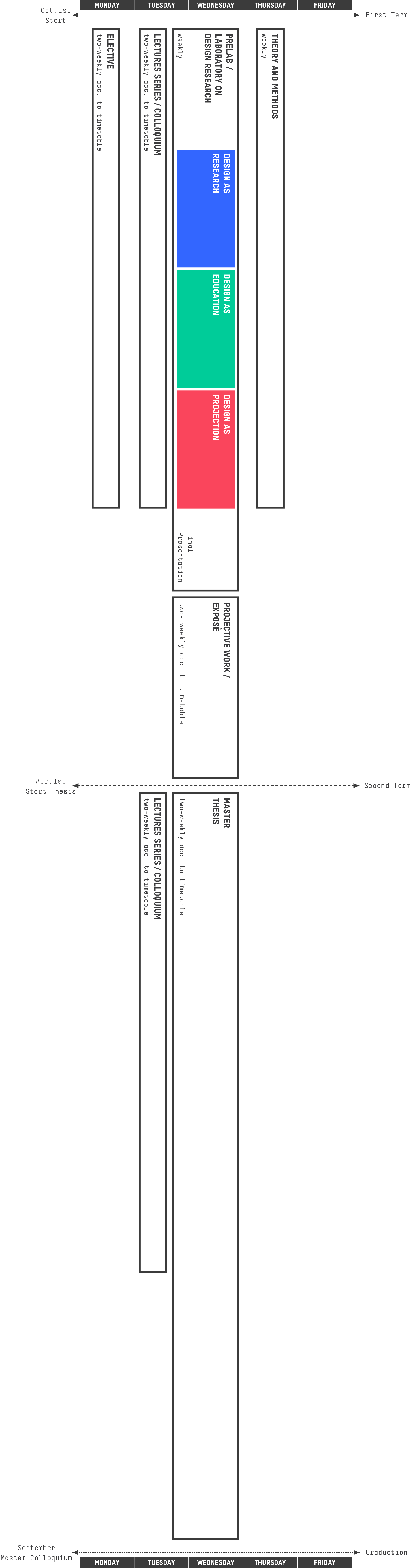
The first term curriculum (October-March) is built around intensive seminars, collective learning sessions and excursions facilitated by the interdisciplinary COOP teaching team. Renowned researchers and practitioners in the field will visit our studio space at the Bauhaus, for regular guest lectures and workshops, providing insights into current practices, debates, and discourse in design and architecture studies. Frequently, course work will take participants to educational and cultural institutions in the region, in Berlin and abroad.
In the second term (April-September), participants focus on individual research projects for completing their Master’s thesis. Developing and implementing your research design for the thesis project will be supported on an individual base by selected academic advisors, as well as collaboratively by a structured research colloquium providing space for peer feedback.
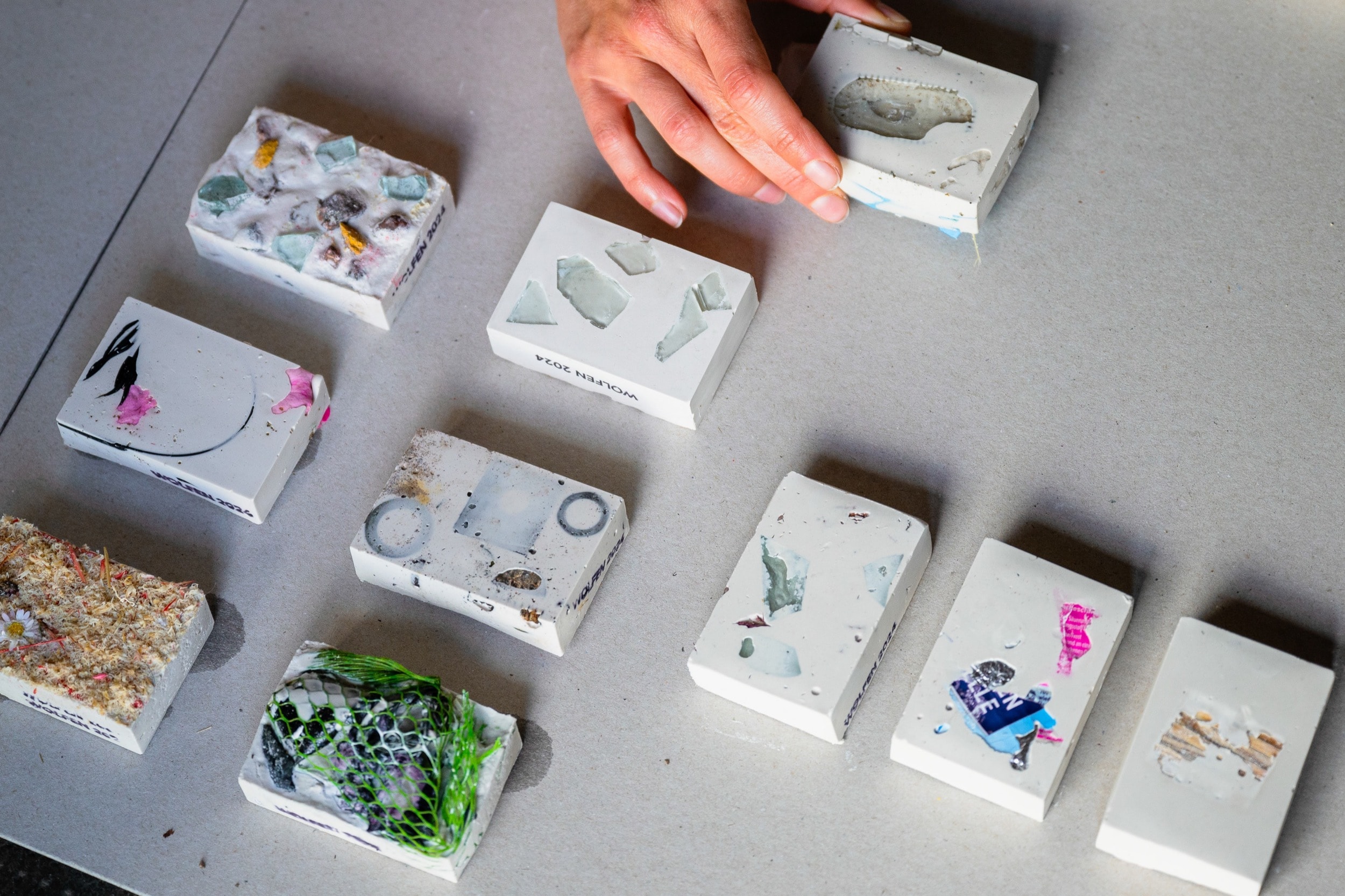
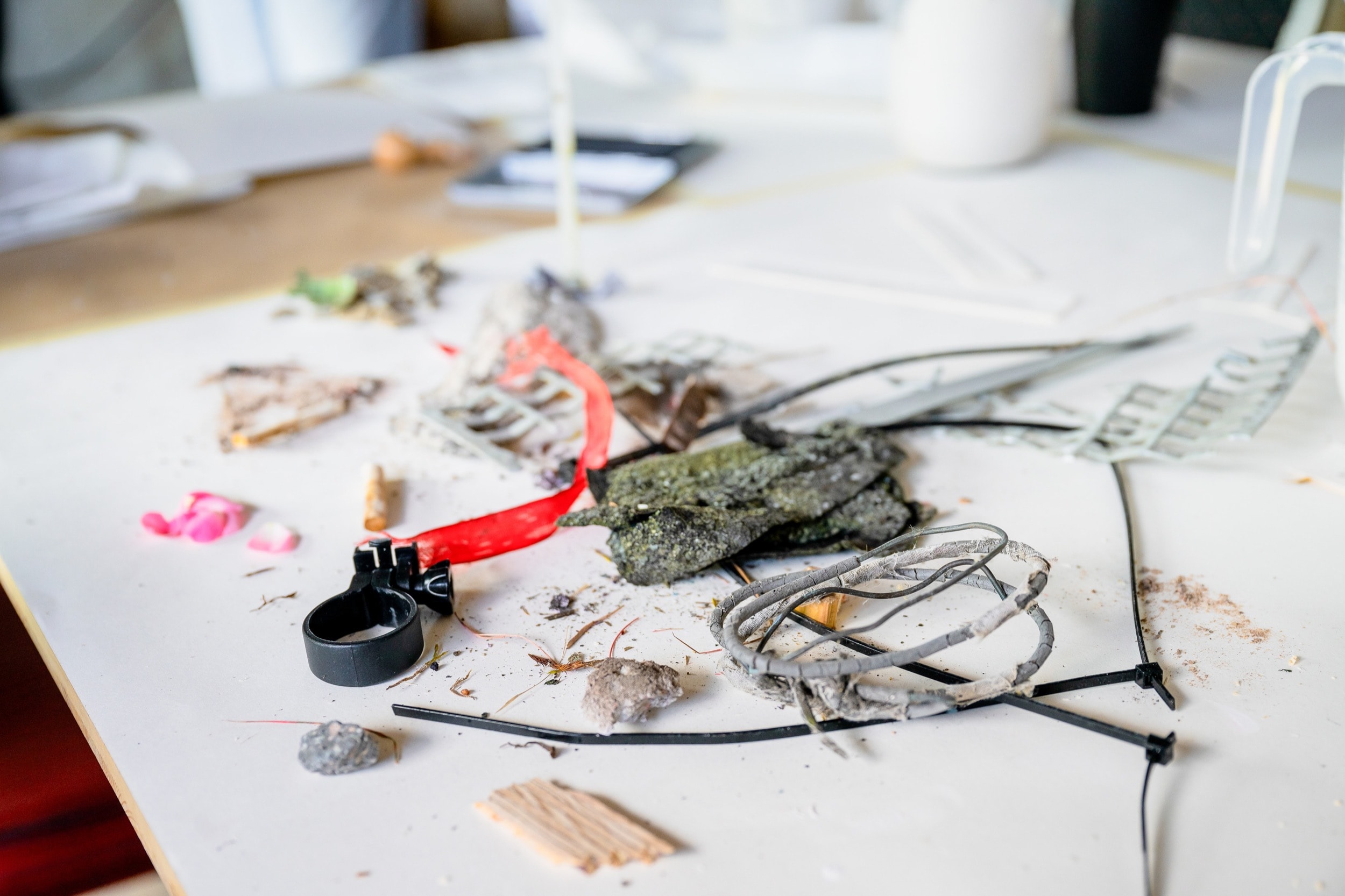
The Design Research Laboratory focuses on how processes of knowledge production in and by design can be framed, studied and analyzed. In an intensive seminar sequence with excursions and hands-on workshops, three main modes how designers contribute to produce knowledge(s) will be explored: Design as Research, Design as Education, and Design as Projection.
Design as Research…
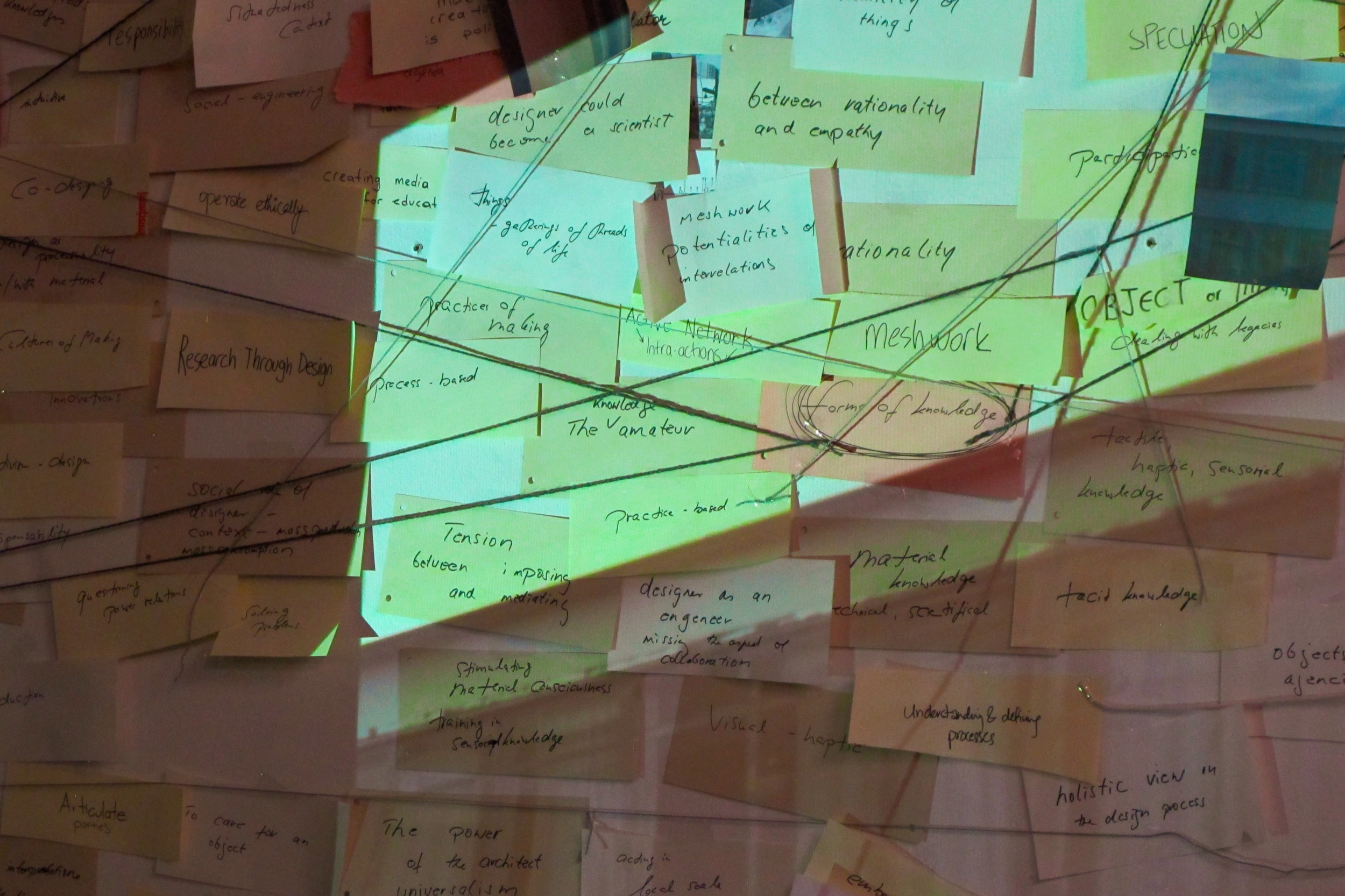
offers a deeper inquiry into changing design discourses and research perspectives on knowledge types and practices – such as knowledge of actions and meanings, routines, norms, values and theories as well as practical skills and competencies. The course’s structure comprises historical and theoretical reflections within different time layers. It traces lines of debate from the “invention” of design as a research-based practice at the Bauhaus school to critical reflections on design concepts in its historical context that align design with universalist and modernist knowledge regimes.
The seminar analytically situates knowledge(s) within material culture and design ecologies, challenging design discourses deeply rooted in a colonial past, and discussing alternative narratives in design history and research. Against this backdrop the course introduces design anthropological approaches and discourses on renegotiating design knowledge and action, cultures of making and designing as radically collaborative, situated and participatory, as a mode of collective practice and the associated epistemological upheavals.
Design as Education…
takes as its starting point the Bauhaus as part of a broad and international school reform movement that initiated a paradigm shift in art and design education. Based on the controversial and manifold narratives surrounding the transcultural pedagogical legacy of the Bauhaus, the course comprises the study of different creative learning experiments, radical pedagogies, progressive education institutions and learning environments, that are reflected in their historical contexts and theoretical framings. Thus the course is structured along methods and tools, institutions and spaces of design learning – as “third educators”. It pursues the questions what types of knowledge, values and norms are reproduced in design and architecture education, and what alternatives in the context of critical postcolonial and feminist approaches are visible in the learning environments of design schools? Dealing with knowledge canons reproduced in design education, the seminar discusses approaches from the De-schooling movement and community-based learning in the field of design and architecture education and discusses places of learning as microcosms of societal transformation and democratic participation.
Design as Projection …
explores the projective properties of design, architecture, and other kinds of spatial practice by tracing how different strategies of anticipation and materialization are employed in order to change society. This includes a reflection on the collateral effects of these practices and strategies in a multi-scalar perspective, for example regarding externalization, environmental justice, toxicity or landscape transformation. The course asks in which ways design practice and research continue to reproduce dissociative knowledge patterns or seek to develop awareness and reflexivity in regards to these planetary concerns. By close readings of designed objects, spatial and discursive interventions, we trace how architecture and design participate in knowledge production, societal transformations as well as in tangible larger anthropogenic processes of degradation, or repair and reconciliation.
How do learners learn to become designers? How do designers learn to become (academic) researchers? Providing an overview of major traditions and theories in the field of design research, this course gives an introduction to such notions as research, knowledge, and creativity in the design field. It offers analytical tools for understanding creative processes and their products. Participants acquire foundational and broader knowledge of design research, knowledge types and the methods of various scientific disciplines. A lecture series offers an overview of the history of modern design research and presents discourses, projects and concepts in the field. Accompanying seminaries introduce methods and techniques of scientific work, from literature research to archive study, data analysis, material studies, interview techniques, or qualitative methods such as participatory observation. The course enables participants to take a reflexive and confident approach to apply these methods in the framework of their Master’s thesis and future design research endeavours.
A key aim of the program is to nurture essential academic research and writing skills, to build up trust in your own capacity of handling academic texts and workflows, and to train your capability to engage critically with a research subject. This includes developing a reflexive practice of research and writing, leading up to an individual research-based thesis project. In the second term, the colloquium will focus on the application of these strategies in each individual thesis, offering a structured space for a collaborative feedback and discussion of projects in progress.
Our MSc program offers the opportunity to pursue individually chosen topics in Design Research Master thesis projects and to work in close cross-disciplinary exchange with academic mentors and peers in the process – from proposal elaboration to research design and implementation, from developing your research questions and methods to writing and presentation strategies. It is our aim to enable and empower participants to seek original pathways towards reflexive and situated knowledge production in Design and Architecture studies, both independently and collaboratively, considerate of positionality and proficient of the state of the art, theory and methodology in their field(s) of engagement.
Concluding the first term, the proposal module serves as a test phase for elaborating an independent, original design research argumentation as a thesis exposé. In the second term, participants develop and elaborate their research argumentation to a full thesis advised by their mentors within 20 weeks. Proposals and Master’s Theses will be presented for feedback and discussion in public colloquia.
DESIGN THINKING
A REFLECTION THROUGH ITS ORIGIN, EVOLUTION AND (NON) DEFINITION
MISE-EN-SCREEN FROM DIGITAL GAME
SPATIAL PHILOSOPHIES TO INTERACTIVE DIGITAL NARRATIVE DESIGN IN VR
A METHODOLOGICAL EXPERIMENT INTO DIFFERENT KNOWLEDGES
SHAPING A THEORY-PRACTICE THROUGH PRINTMAKING PROCESSES
AN EVALUATION OF AN INDUSTRIAL DESIGN COURSE
INDIAN DESIGN PEDAGOGY
AN ANTI-CASTE PERSPECTIVE
WHERE BIRDS, BUILDINGS AND HUMANS MEET
UNVEILING GENDERED NARRATIVES IN PAKISTANI KITCHENS
A STUDY OF KITCHEN DESIGN, GENDER ROLES AND SOCIETAL PERSPECTIVES IN PAKISTAN
ANALOGIES
THE CASE OF THE BAUHAUS BUILDING IN DESSAU
BOUNDARY WALLS
AN ETHNOGRAPHY OF PHYSICAL ENCLOSURES IN THE EVERYDAY LIFE OF A CITY
TRANSITIONING FROM PHYSICAL TO VIRTUAL SPATIAL PROXIMITY
THE EFFECT ON PERFORMANCE WITHIN THE EUROPEAN CONTEMPORARY OFFICE
GRAPHIC SKILL FOR SOCIAL PRACTICE
THE CHANGING ROLE OF COMMUNICATION DESIGN IN SOCIETY
TOWARDS AN EFFECTIVE COMMUNICATION BETWEEN DESIGN AND ENGINEERING TEAMS WITHIN ORGANIZATIONS
A NEW PROPOSAL FROM A DESIGNER´S PERSPECTIVE
Talks by international guest lecturers from academia and design are integrated in the curriculum, introducing contemporary design research issues from their respective research contexts and/or practices. Elective workshops with guests and researchers based at the COOP partner institutions are another key component of studies, offering deeper hands-on engagement with a broader spectrum of approaches.
Guest talks and COOP module workshops were offered by, among others:
- Maja Avnat
- Karin Berkemann
- Bastian Beyer
- Michaela Büsse
- Riccarda Cappeller
- Lilli Carr
- Mary Copple
- Christian Dootz
- Adam Drazin
- Jesko Fezer
- Kim Förster
- Pauline Garvey
- Imad Gebrael
- Maria Göransdotter
- Natascha Halbritter
- Sabine Hansmann
- Regine Hengge
- Gilly Karjevsky
- Anita Kaspar
- Hamid Khalili
- Katja Klaus
- Richard Koeck
- Rebekka Ladewig
- Jens van de Maele
- Claudia Mareis
- Louise Mazet
- Fynn Morten-Heyer
- Lucy Norris
- Pedro Oliveira
- Nicole Opel
- Marina Otero Verzier
- Anne D. Peiter
- Iva Rešetar
- Patricia Ribault
- Lía Duarte Rodríguez
- Philipp Sack
- Karan Saharya
- Friederike Schäfer
- Maxie Schneider
- Angelika Seppi
- Åsa Ståhl
- Christian Stein
- Alexander Stumm
- Vivien Tauchmann
- Mara Trübenbach
- Lilo Viehweg
- Angelika Waniek
- Lea Weise
- Nina Wiedemeyer
- Albena Yaneva
- Li Zhuozhang
Bauhaus Study Rooms
Every year, the Bauhaus Study Rooms invites the international community of scholars and designers associated with the educational programs of the Bauhaus Foundation Dessau to come together, fostering exchange, collaboration, and dialogue. These temporary, transversal learning spaces emphasize polyphony, transdisciplinarity, and multi-perspectivity, allowing students and graduates to explore collective forms of knowledge production.
Rooted in the contributions of their participants, the Study Rooms form an interface between the local context and the program’s global network, opening these explorations to a broader public.
Requirements, Fees
This MSc. Program requires
- Diploma or a Bachelor / Master degree in Architecture or Design, Cultural Studies or similar of at least 240 ECTS (four years)
- at least one year’s proven work experience in architecture, design and/or cultural production.
Application period for Fall 2026
December 16th, 2025 – May 15th, 2026
Rolling admission process for early submissions
Fees
1.250 EUR / Semester
For further questions, please contact: info@coopdesignresearch.de
Applications are processed via the Uni-Assist portal, if you received your university admission credentials in another country than Germany. All application documents must be in either German or English language.
Please include:
- Photograph of yourself (Passport-size 35 mm x 45 mm, color)
- Letter of Intent, articulating your interest and describing your background (two parts of 300 words each, please use the form “Letter of Intent” below).
- Portfolio (10-12 pages, PDF of maximum 10 MB)
- CV / Resume
- Diploma certificates (Certified Copy – signed and stamped by your university)
- Transcripts of Grades for your university degree(s), including a grading scale and showing 240 ECTS (Certified Copy – signed and stamped by your university)
- Proof of C1 English Language ability (IELTS/TOEFL exam results or confirmation letter of your previous university the medium of instruction was English)
- Proof of one year employment (letter of recommendation, confirmation of employment, working contract, or a similar document. A minimum of 10 months’ work experience must be completed after obtaining your Bachelor’s degree.)
- Passport (Scanned copy)
Apply Now
Thank you for your interest in applying to the COOP DESIGN RESEARCH MSc program. Please start your application here. Please use the provided form for your Letter of Intent and contact us for guiding you through the application process!
Applicants are admitted for Fall term only; there is no mid-year admission.
At Uni-Assist,
- Please enter course name “Design Reseach” top left of the page.
- Make sure to select the correct Winter Semester.
- Please follow this step-by-step description.
The applications period for Fall semester 2026 closes May 15th, 2026.
Please allow sufficient processing time for filing the application through the Uni-Assist portal, as all requested documents must be supplied by the closing date, May 15.
Contact
Project Team
Prof. Dr. Elke Beyer
Prof. Dr. Regina Bittner
COOP Design Research MSc Program
Bauhaus Dessau
Gropiusallee 38
06846 Dessau, Germany
Phone: +49 (0) 340 5197 1557
Fax: +49 (0) 340 5197 1599
Email: info@coopdesignresearch.de